
Introduction
In modern industrial environments, electrical systems are the backbone that keeps operations running — from manufacturing plants and data centers to power facilities and large-scale infrastructure. However, with increasing system complexity and higher energy demands, electrical hazards have become a critical concern for organizations.
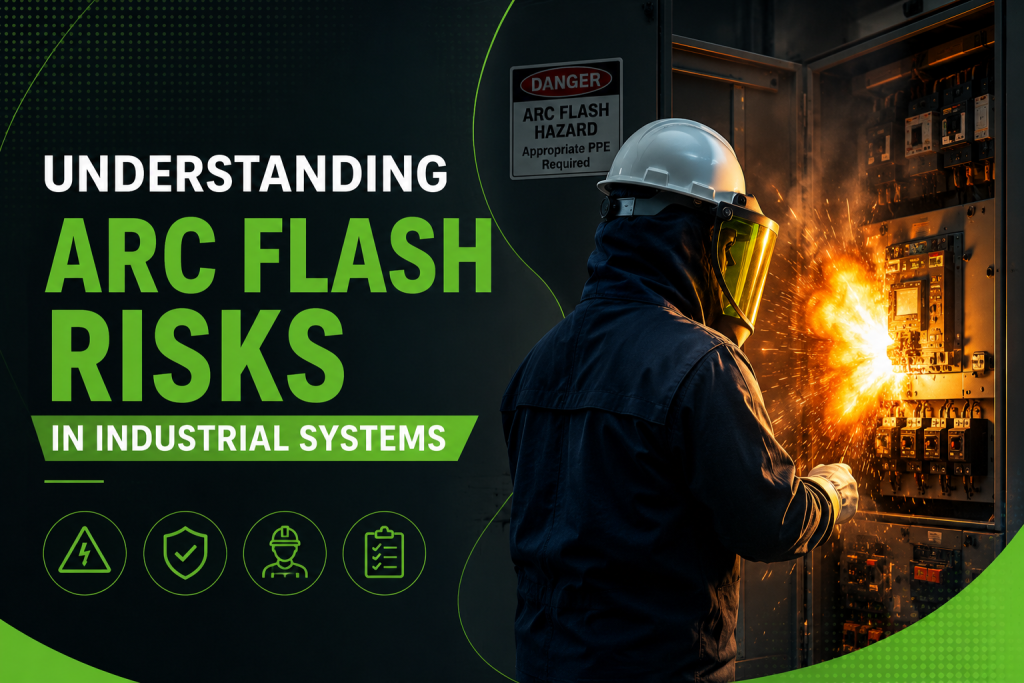
One of the most serious electrical hazards is Arc Flash — a sudden release of electrical energy that can cause extreme heat, pressure waves, intense light, and dangerous debris. Without proper engineering analysis and protection measures, arc flash incidents can lead to equipment damage, operational downtime, and significant safety risks.
What Is an Arc Flash?
An arc flash occurs when electrical current travels through an unintended path between energized conductors or between a conductor and the ground. This creates a high-energy electrical arc that rapidly releases heat and pressure.
During an arc flash event, temperatures can reach thousands of degrees Celsius within milliseconds, potentially causing:
- Severe equipment damage
- Electrical fires
- Explosive pressure waves
- Burns and injuries to personnel
- Unexpected system shutdowns
Arc flash risks are especially common in medium- and low-voltage electrical distribution systems where maintenance activities, faults, or equipment failures may occur.
Common Causes of Arc Flash Incidents
Several factors can contribute to arc flash hazards in industrial systems:
1. Equipment Failure
Aging electrical equipment, insulation degradation, loose connections, or component failures can create conditions where an arc may develop.
2. Improper System Design
Poor coordination between protective devices, incorrect fault calculations, or insufficient system studies can increase the severity of an arc flash event.
3. Human Interaction
Maintenance activities, testing, switching operations, or incorrect procedures near energized equipment can introduce risks.
4. Environmental Conditions
Dust, moisture, contamination, and harsh industrial environments may reduce electrical insulation performance and increase failure probability.
The Importance of Arc Flash Studies
An Arc Flash Study is an engineering analysis performed to evaluate potential arc flash energy levels within an electrical system.
A comprehensive study typically includes:
- Short circuit analysis
- Protective device coordination study
- Arc flash energy calculation
- Incident energy evaluation
- Arc flash boundary determination
- Safety labeling recommendations
The results help organizations understand where risks exist and implement effective mitigation strategies.
How to Reduce Arc Flash Risks
Industrial facilities can significantly reduce arc flash hazards through a combination of engineering controls and operational improvements:
Engineering Solutions
- Optimizing protection settings
- Improving relay coordination
- Upgrading electrical equipment
- Installing arc-resistant switchgear
- Reducing fault clearing time
Operational Solutions
- Establishing electrical safety procedures
- Providing appropriate PPE requirements
- Training personnel
- Performing regular system assessments
Compliance and Safety Considerations
Many industries must comply with electrical safety standards and regulations to protect workers and maintain reliable operations. Proper documentation, system studies, and risk assessments are essential parts of a modern electrical safety program.
Beyond regulatory requirements, effective arc flash management helps organizations:
- Improve system reliability
- Reduce unexpected downtime
- Protect critical assets
- Create safer working environments
Conclusion
Arc flash hazards represent a major challenge in industrial electrical systems. As power networks become more complex and demand for reliability increases, organizations need proactive engineering solutions to identify and control these risks.
Through detailed electrical studies, protection system optimization, and proper safety practices, businesses can ensure their power systems operate safely, reliably, and efficiently.
Understanding arc flash risks is the first step toward building a safer and more resilient industrial power system.